
Our Blog Updates
Read if you think you can manage with Google Translate 10 reasons why you need a professional translation service
Maintain Confidentiality
It may be that the texts your business needs to translate are commercially sensitive or need to remain confidential. Using Google translate doesn’t ensure that information is kept confidential.
“When you upload, submit, store, send or receive content to or through our Services, you give Google (and those we work with) a worldwide license to use, host, store, reproduce, modify, create derivative works (such as those resulting from translations, adaptations or other changes we make so that your content works better with our Services), communicate, publish, publicly perform, publicly display and distribute such content.”
Google’s terms of service give it a free hand to deal with your information; more than you might realise:
The same goes for a translator who isn’t a professional and who isn’t bound by a code of conduct. Most professional translators belong to professional associations, which all have codes of conduct. Part of good conduct is in keeping customer information confidential. Your professional translation service provider will probably mention confidentiality in their terms and conditions. Very important for commercially sensitive material.
Maintain Standards
Trained linguists are also well versed in ensuring consistency throughout your text. Professional translators often use translation software to help them with this, especially for large texts. This is important if you’re going to reuse and recycle texts in different ways. You don’t want embarrassing inconsistencies bringing the brand image down.
With professional translators, you know what you’re getting, and you know you’re getting a good deal.
Ikeyam provides important benefits for your business. Get in touch to find out what we can do for you.
No embarrassing errors
How many times have we laughed looking at misspelled boards, or mis translated sentences?

A good example of the perils of not using a professional was the Galician produce fair that was mistranslated as the “Clitoris festival”. Local officials in the Northern Spanish town of As Pontes wrote the announcement in Galician, one of the regions official languages. Google translate was used to create the Spanish version but confused the Portuguese version of the word which means both vegetable and clitoris. Errors like these might generate publicity, but bad translation will make your brand look bad.
Bad translation will make your brand look bad!
Expertise
If you use professional translation services, you know you’re working with trained linguists. Besides studying languages, the people handling your texts have immense experiences in handling texts. A human in the loop can help solve various issues that a Google translate cannot handle, like, understand complicated human feelings, being culturally sensitive and intelligent, understand words that have multiple meanings, provide accurate translations with the contexts. The fact that your professional translator is qualified also means they’re faster than someone doing your translation in their spare time.They may well use translation software to help them work faster and ensure consistency.
Target and get results
If your text is a marketing translation, Google translate won’t cut the mustard (just try Google translating that phrase into a few foreign languages). If you want to sell, you’ll need a professional translator who knows their way around SEO translation and marketing translation. Make sure your translation draws in qualified leads. A translation services provider who understands SEO can create more visibility for your brand. Amateurs are unlikely to be able to offer this service and Google translate certainly won’t.
Volume is not a constraint
Google translate and other AI engines cannot handle large volume of texts, and doing this may cause a lot of errors; leave aside the blatant grammatical errors and misunderstandings it might produce. Large volumes of texts can be handles by our team of experts.
Availability of resources
An agency like Ikeyam is a one stop solution for your translation needs. As a company, you do not have to find different freelancers/resources to translate the texts in your domain or wait to hear from them or run out of resources when you most need them. This means that long-term or ongoing projects are well taken care of with such agencies.
One stop solution! Many under one roof...
Cost
When the volume is high and when it’s given to an agency rather than a freelancer you get professionalism plus you can optimise on the cost. A professional translator can use their experience to estimate how long the job will take. They can provide you with a delivery time and you can plan around that. If you’re using someone who isn’t experienced or doesn’t translate for a living, it’ll probably take them a lot longer. They might need more time for queries and resolutions. When you use professional translation services, you know what you’re getting and when.
Transparency
Transparency from beginning to end related to written terms and conditions is the main issue which keeps popping up. Professional translators produce written quotations for customers. These list important details such as the project name and type, length, price, delivery format and date without any hidden costs. The customer accepts the quotation and the terms and conditions before the project begins. This ensures everyone is happy with the project and helps avoid misunderstandings.
Specialists of a domain
You wouldn’t take your sick cat to the dentist, and the same goes for translation. A professional translator who specialises in your industry can provide a very high-quality service. They’ve chosen to prioritise a particular field and have experience of your kind of text.It’s important to choose the right professional for your project.
You wouldn’t take your sick cat to the dentist, and the same goes for translation.
Let’s Talk about Expatriates Challenges

Like it or not, we are rapidly moving into a multi-cultural society. India that has rich cultural heritage and diverse multicultural society within itself, now hosts a large number of expats from all over the world. Reports and statistics show that the number of international migrants has been robust over the last two decades, reaching 281 million people living outside their countries of origin in 2020, up from 173 million in 2000 and 221 million in 2010.
Expatriates contribute to the development of their countries of origin through the promotion of foreign investment, trade, access to technology and financial inclusion.
But, an Expat’s life can be like an emotional roller coaster: great experiences full of excitement take turns with negative feelings and anxiety-filled moments, especially when facing a brand-new reality for the first time. From culture shock and homesickness to lack of sleep and despairing over paperwork, expats are not immune when it comes to stress.
Below are 9 common challenges that an expatriate faces while relocating:
Challenge 1# - Paper work
Paperwork is one of the most crucial and delicate parts when relocating. Dealing with visas, permits, and insurance, maybe in another language and with different regulations, is among the main reasons for anxiety both before and during a stay abroad. Without a good organization or external help, it can be hard for an expat to keep track of all the documents necessary and to stick to deadlines or important meetings, all while trying to adjust to a new country.
Challenge 2# - Adjusting to a different time zone
No matter how much you prepare for it mentally and physically, it comes as a shock when you land in a different country with a whole new life ahead of you. Most of the expats have a mix of both positive and negative emotions like excitement, anxiety, worry etc. but unless they get the right advice from the right kind of people, their expectations and reality will never meet.
Challenge 3# - Worrying about Health concerns & Safety
Making sure you have proper global health insurance while living abroad is one of the biggest concerns that many expatriates worry about when it comes to relocation. Local plans in your new host country may not be up to your standards. Local hospitals may only provide basic coverage. Most expats want to have access to private healthcare both in the host country, regionally, and back home. But in India, most of the times the companies that hire you determine the healthcare, insurance and some even ear mark hospitals to which an expat can go in a particular city.
Challenge 4# - Relocating family, setting up a new home
Expats who leave their family back at home have a completely different set of emotions when trying to work out their long distant relationships with their spouse or a partner or children. Expats who decide to bring their families to the host countries too have challenges.
If you are moving to a country that speaks a different language, settling in and befriending locals can be daunting. Finding the right home, schooling for children, shopping and other aspects that are needed to run the day-to-day life in the new host country can be challenging. The fact is that, even the small everyday tasks can become a struggle: from understanding how the public transportation system works to finding where to get the groceries, making a new place feel like home in the middle of the unfamiliar isn’t simple.
Ikeyam has set of professionals who can assist you overcome these challenges by ably guiding you until you acclimatize in the new environment.
Challenge 5# - Adjusting to new language & culture
Acclimatizing to a different culture and experiencing an unfamiliar way of life for the first time can be a struggle for many expats. In fact, culture shock is a common phenomenon among those who move abroad and, especially during certain stages, it goes hand in hand with a sense of anxiety and alienation.
Not only cultural differences can be hard to understand, the language barrier also plays a significant role. Feeling lost or inadequate is one of the most frequent consequences, especially for expats who move without knowing the local language at all. However, speaking the local language can be frustrating, too: making mistakes, having an accent, or not being able to completely express a simple idea bring frustration and can lower one’s self esteem.
Let us help you overcome this challenge, immerse yourself in the cross-cultural orientation program or hire a translator or an interpreter for your official needs through us.
Challenge 6# - Facing unrealistic or unmet expectations
Before the international adventure begins, some expats tend to build up their own expectations on what their life abroad will look like and imagine a new start filled with exciting adventures, new friends, and opportunities to escape from the usual routine. Once the initial excitement fades away, however, realizing that you will be confronted with tough moments and that expat life is not perfect can be a painful experience and negatively affect the whole stay abroad with feelings of anxiety, discontent, and even depression.
Challenge 7# - Feeling isolated or homesick
Leaving your friends and building a new network from scratch in another country is a challenge for many. In this situation, especially during the first weeks or months, it is easy for expats to feel isolated and lonely and to doubt themselves. Not only making friends can be hard, but also living far from family can be a huge challenge and lead to homesickness: a lack of regular personal contact with loved ones can be frustrating.
Challenge 8# - Finance management and taxation of income
Organizing your finances, taxes, and money management can be daunting when you are living in a foreign country. As an expatriate, you will have to decide if you will become a non-resident for tax purposes.You will also have to advise your bank that you will be living abroad. Once in your new country, you probably have to set up a new banking account. Most countries will want to see your visa documents and also some proof that you will be living there. It may be useful to keep your bank account back home as well. Having a bank account in your new host country in the local currency will still be invaluable and probably save you on foreign exchange. You may also have to move your investment account as well. So, talk to your investment advisor and tax accountant to see what solution works best. Since these formalities take place within the first few days of arriving in your host country, it is advisable to bring multiple copies of your photograph and photo copies of your passport and visa for these purposes.
Challenge 9# - Worrying about people who serve you – Building trust
When you come to a country like India, the biggest luxury the people enjoy is the ability to get help for pretty much everything. You need someone to do your dishes, your laundry, cleaning the house, the country has it covered with an army of people waiting for an opportunity to help.
Right from full time house maids to security guards to drivers to just helpers for running errands, there isn’t anything you can’t get help with. And best of all, you don’t need to be a billionaire to be able to afford all that. An average salary that an expatriate house hold give for a cleaner is between 6,000 Rs – 9,000 Rs (82$ - 123$) a month, depending on the working hours and the working days. Getting a reliable house help is the real challenge that many faces. For this, you your house staff to be verified by a third party, ideally the local police, in order to prevent getting into a messy situation later.
But, since your life in the host country will revolve around them constantly; it is important to hire the right person and understand them over time. A few frequently asked questions by our clients in this regard is that “do we have to tip them every day?” The answer is a “NO”.You are paying them a monthly salary and that’s good enough. However, if you get any extra work done and if you wish, you can give them some extra money. While it is important to build trust, you do not have to believe everything they say, always ask a native friend or approaching your company’s HR is also a good idea when you have a question or a doubt.
If you are an expat and are struggling with these challenges, don’t forget that there is always a light at the end of the tunnel and that you are not alone in this. We would like to share with you some practical advice on how to cope up with such challenges in the next post.

Benefits of using a Cloud-Based Translation management tool for translation
We live in a constant evolving space and the evolution that has happened in the translation space has its merits and demerits. Whether you’re a translator, a translation agency, or a business in need of translation, you are likely to be using some form of translation software to improve your translation workflow. If you’re not, you could be spending far longer on your translations (or a lot more money!) than necessary.
Translation software programs are designed to make the translation process quicker and more efficient. With them, you can store and edit translations, translate projects section by section (while preserving the formatting), and ultimately add an extra layer of quality control (consistency, spelling, equivalence, etc.). They also make terminology management a lot simpler: you can create, access, and use terms and translation memories as you work on your projects. When we talk about translation software, we usually mean CAT (computer-aided translation) tools, which should not be confused with machine translation. Although the terms might sound similar, CAT tools help translators streamline their translation processes, but do not do any of the translations for them. Machine translation, on the other hand, uses artificial intelligence to directly translate texts.
Translation software tools all serve the same purpose: to assist in and accelerate the translation process. But there are different types of software out there to suit different circumstances and needs. For example, translation software tools can be downloadable desktop programs you install on your computer or cloud-based solutions you work on online. They can be paid or free.
Cloud-based (or web-based) translation tools are programs that are accessed and used online via a web browser. These platforms are becoming increasingly common in all industries, and key players in the world of translation are following suit.
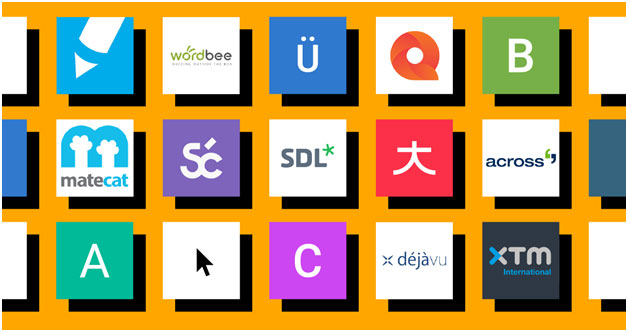
Tools such as Trados, Memsource are cloud-based translation toolswhich makes the life of a translator easier. Below are a list of Merits and de-merits of using a CAT tool for translation:
Merits:
- The amount of effort and time required to translate a document is reduced considerably when we make use of these cloud-based tools in bulk translation.Conventionally, translators were required to spend time in understand the given text and then type the translation manually, which was quite the tedious task, and after which self-review, along with peer review were to be undertaken seriously, so that not a single mistake may be overlooked. Also, when using cut & copy or paste options...translators might tend to miss the original format or have some errors in maintaining the original text.
- Cloud based tools saves not only time and effort, but also maintains the original format.
- Translators can enter the review process directly as the tool provides them with the translation and are only required to checkthe given translation and correct whenever required.
- By utilizing the memory storage option, whenever the same type of sentence is repeated, the tool will suggest using the old translation.
- In this way, consistency can be maintained and bulk translations can be done in an easy and quick way without much tedious work.
- Translations are saved in real time so you won’t lose any data.
- It’s easier to collaborate with others online.
- Easy to define workflows. For example, an end client review of the data can be set in these softwares.
- Clients can have real time access and check the progress of the work.
- You can work from any operating system, whether it’s Windows, MacOS, or even a variation of Linux.
- You can access it on any device with an Internet connection.
Demerits:
- However, a translator’s ability and experience might deteriorate. Similar to how once we started using smart phones, people tend to forget their own phone numbers, or don’t bother to learn other numbers because everything is provided for you by the smartphone with a press of a button.
- Likewise, if a file is pre-translated using tools, overtime translators might forget onhow to originally translate adocument.
- Highly reliant on an Internet connection. To remedy this, some software tools allow you to continue using most features if you lose your connection.
However, any day the merits outweigh the demerits of using a CAT tool for translation. What’s your opinion?

Tips to be an exceptional translator
Shogo Mizutani
A Translator needs to do a variety of things to be exceptional translator, and they need to constantly keep brushing their skills of translation. What I believe is the most important skill for a translator is choosing the most appropriate and simple words so that the reader is able to understand and comprehend the translation.
Now I am going to write five tips that I practice to be a distinguished translator.
Tip 1#
The first tip is reading books, newspapers and relevant articles in the field of work for having the grasp of the appropriate and contemporary expressions. New perspectives, grammar usage patterns and sentence formations can aid you and can be implemented in your translation work. This helps the reader comprehend the content easily with high efficiency.
Tip 2#
Gain knowledge in various fields. We have to translate documents in various fields such as IT, healthcare, foods, politics and so on, therefore, we should know the field specific jargons, abbreviation and terminologies, especially those that have special meaning.
Tip 3#
The client is always right! We should practice to hear the client’s feedback and think about what the client needs. We should follow the client’s suggestion while translating because clients are specialists in that field and they know if the translation conveys the essence of the point of view they are trying to get across.
Tip 4#
I consciously try to explain something to someone with appropriate and easy words just as I would do in a translation. Vocal memory also helps us while translating. When we constantly try and use words or make appropriate sentences for their understanding, you develop the skill, which can in turn be used while translation. So it’s a good bet to practice it in daily life as well.
Tip 5#
The last tip is reviewing the content objectively by myself after completing the work from the perspective of the reader. This might seem basic but is most important as our translation are meant for the consumption of a reader. Hence, I always do reviews objectively before submitting my work.
Thanks, I hope you enjoyed reading my tips. Do let me know what you do and how we can improve our translation quality. I will continue to improvise and work hard.